The Titusville–Cocoa connection: county-seat politics across the lagoon
Cocoa is bigger. Titusville has the seat. The standoff between the two largest Brevard County cities shaped every 20th-century debate over relocating the courthouse.
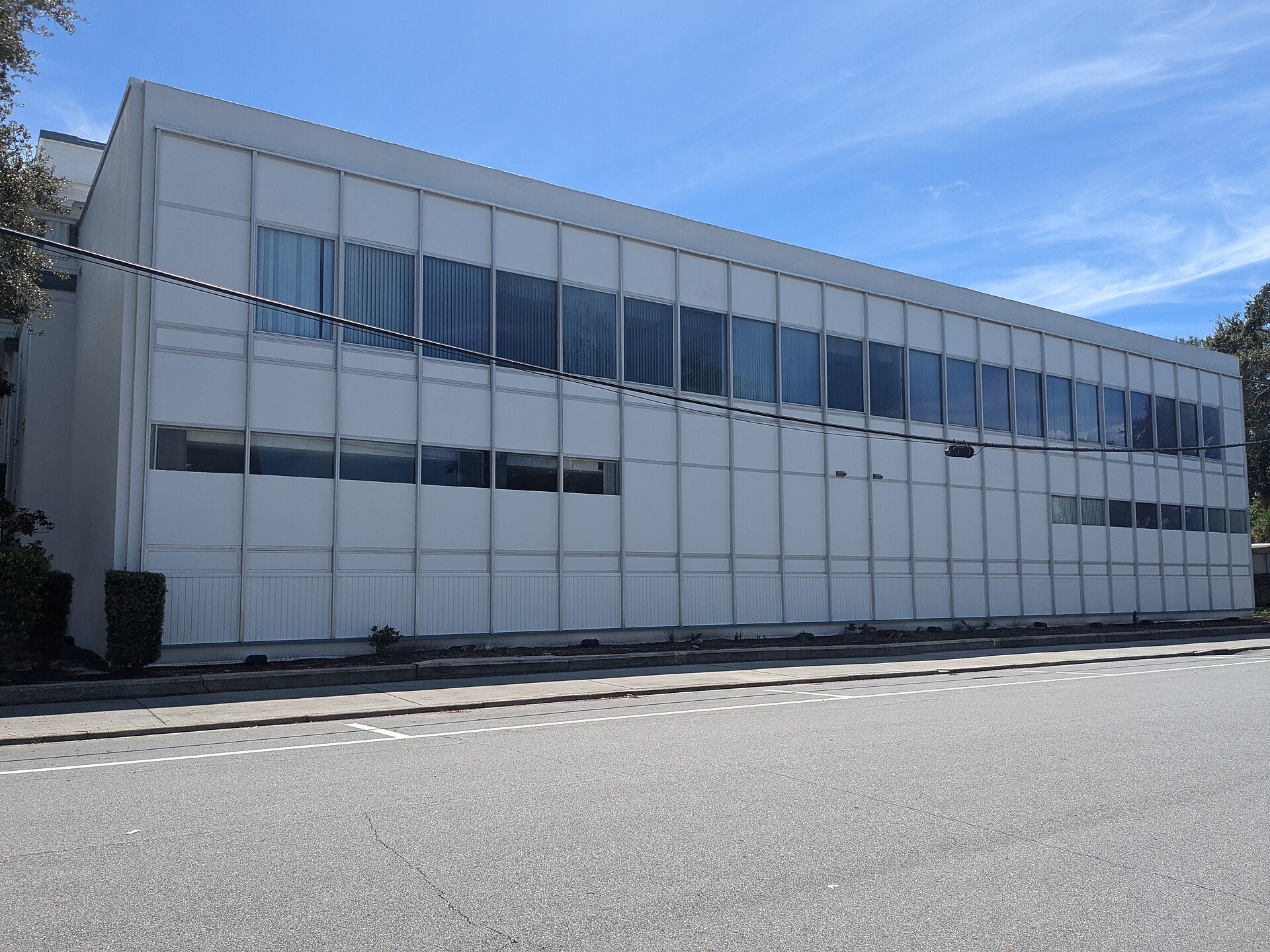
Brevard County has two clearly dominant cities: Titusville at its northern end and Cocoa (with its associated communities Cocoa Beach, Rockledge, and Merritt Island) in its center. By the mid-20th century Cocoa’s combined population in its immediate metropolitan area substantially exceeded Titusville’s. Cocoa had the larger banks, the larger commercial district, the larger employer base. Yet the county seat stayed in Titusville. The politics behind that arrangement explain something important about how mid-20th-century Florida small-county government actually worked.
The population gradient
In 1900 Brevard County’s population was 5,158, distributed roughly evenly between north Brevard (Titusville and Mims), central Brevard (Cocoa, Rockledge, and the older Indian River grove towns), and south Brevard (Eau Gallie, Melbourne, and the smaller communities approaching the Indian River County line). By 1930 the population had grown to 13,283, with central Brevard’s population gain larger than north Brevard’s.
Cocoa, founded in the late 1880s, had the advantages of being on the FEC mainline through and past the Indian River, having a deeper-water frontage useful for early-20th-century freight and recreational boating, and being closer to the population centers of central Florida via the cross-state road system that emerged through the 1920s.
By 1950 Cocoa’s population was approximately 4,239; Titusville’s was 2,604. Combined with Rockledge and Cocoa Beach, the central-Brevard area’s population was roughly twice Titusville’s.
The 1960s NASA boom briefly inverted this. Titusville’s growth from 6,410 (1960) to 30,515 (1970) outpaced Cocoa’s growth for that decade. But by 1990 Cocoa, Cocoa Beach, Rockledge, and Merritt Island combined had a substantially larger population than Titusville again, and that gap has held since.
Why the seat didn’t move
Several formal and informal county-seat-relocation efforts surfaced in the 20th century, most concentrated in Cocoa-area political discussions of the 1920s, 1950s, and briefly in the 1960s during the Apollo boom. None succeeded. The reasons are structural.
The legal hurdle. Florida law requires county-seat relocation to pass both a county-wide vote and legislative ratification. Either step alone is a high bar; both together require political will of a kind that’s hard to sustain across multiple election cycles.
The incumbent’s advantage. Once a county seat is in place, every subsequent capital investment compounds the relocation cost. The 1882 courthouse, then the 1912 brick replacement, then the 1994 Moore Justice Center each made relocation more expensive. The bar association of Brevard County over a century has been concentrated in Titusville; legal infrastructure (title abstractors, deed searches, court clerks, judicial chambers) co-locates with the courthouse.
The geographic asymmetry. Titusville is at the northern end of the county. Moving the seat to Cocoa would have made it closer to central and south Brevard residents but substantially more distant for Mims and north-Brevard residents. The relocation would have transferred convenience from one part of the county to another, not absolute increase in convenience.
The political coalition. Through most of the 20th century, the legislative delegation from Brevard County maintained at least one north-Brevard member who reliably opposed relocation. The local-pride argument was sufficient cover. The relocation question never reached the floor of the legislature in a serious push.
The mid-1960s push
The most credible relocation push came during the NASA boom of the mid-1960s. Cocoa’s population was growing fast (though Titusville’s was growing faster), and the new federal-contractor population in central Brevard was institutionally hostile to north-Brevard’s older political establishment. Several Cocoa-area legislators introduced or floated relocation proposals through 1964–1968.
None advanced. The Brevard County Commission, then with a balanced north-south composition, declined to put the relocation question on a county-wide ballot. By 1969 the question had effectively died. The 1970s post-Apollo contraction removed the political momentum.
The 1994 Moore Justice Center
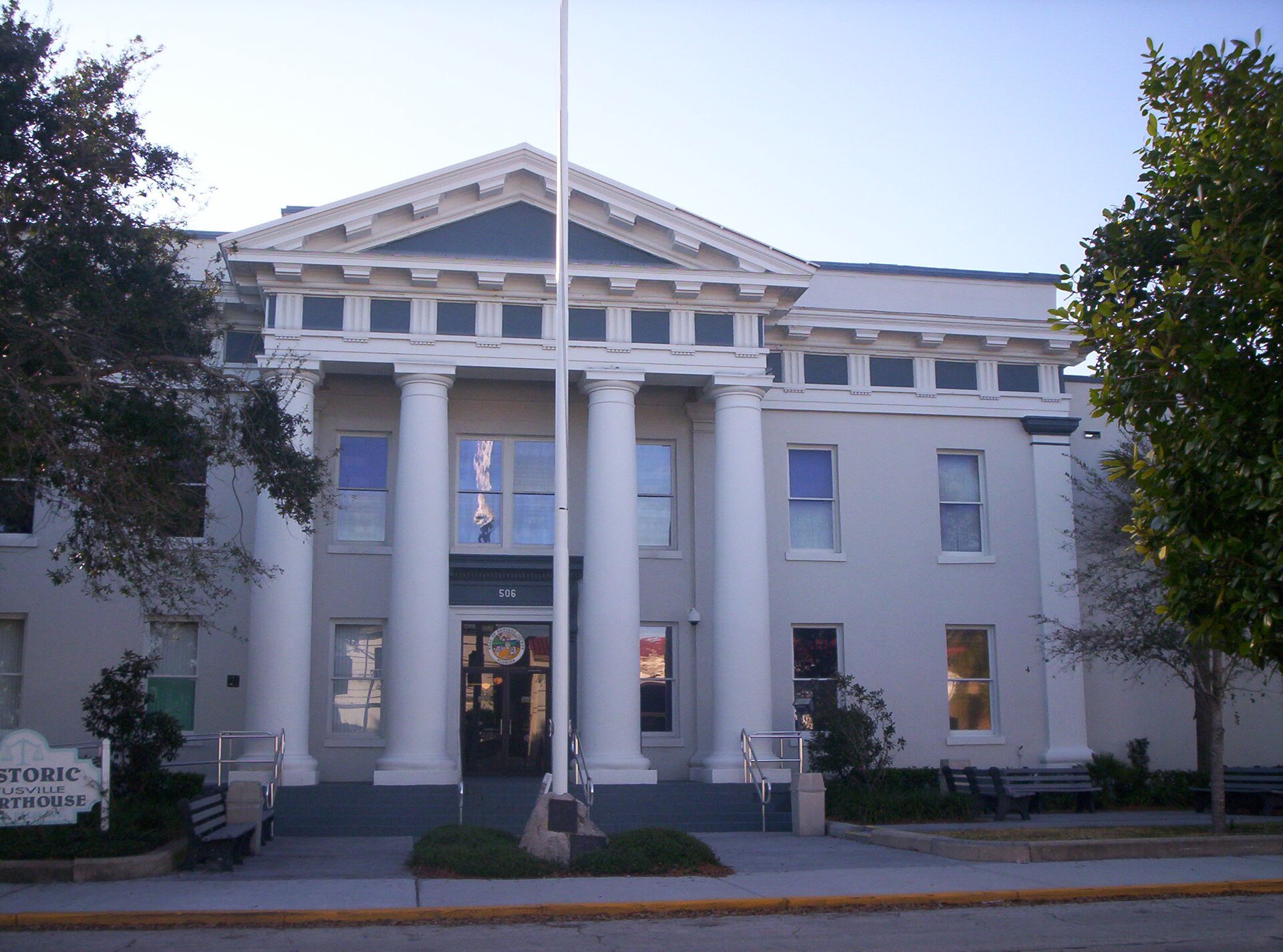
When the active county judicial-and-administrative functions moved from the 1912 courthouse to the new complex in 1994, both buildings stayed in Titusville. The Moore Justice Center is on South Street, a few blocks from the historic courthouse. The choice to build the replacement on the same site rather than relocate to Cocoa or central Brevard was a final, expensive confirmation that the seat would not move. The capital cost of the Moore Justice Center has been variously reported in the range of $40–50 million; that investment effectively closed the relocation question for at least another generation.
The naming for Harry T. Moore was both a civil-rights statement and a north-Brevard cultural anchor. Moore was from Mims and Titusville; locating the building named for him at the seat in Titusville was geographically appropriate.
The cultural divide
Beneath the formal politics, the Titusville–Cocoa divide reflects something subtler: two communities with different economic and demographic profiles that have coexisted in the same county for over a century. Titusville is older, more government-and-industrial, with deeper roots in pre-NASA Florida. Cocoa is more commercial, more tourism-and-services oriented, with stronger ties to the south-Brevard barrier-island beach economy.
The high schools have a rivalry. The chamber-of-commerce politics are distinct. The newspapers (when the Cocoa Tribune was a separate publication) had different editorial profiles. Brevard County’s commission seats have rotated over time, and the north–south balance on the commission has been a persistent low-key political dynamic.
The Viera complex that did move
The relocation that did happen was not Titusville-to-Cocoa. It was Titusville-to-Viera, and it was an administrative migration rather than a formal county-seat change. Per the Brevard County entry on Wikipedia, the secondary county administration complex at Viera was started in 1989 and completed in 1994. Viera sits near the geographic center of the county, in the unincorporated area between Cocoa and Melbourne. Since the complex opened, “Viera has been for all intents and purposes the de facto seat of Brevard County,” even though Titusville remains the official seat.
This was the elegant solution to the Titusville-Cocoa standoff. Neither city had to lose. Titusville kept the legal designation, the historic courthouse, and the ceremonial primacy. Cocoa did not gain the seat. Viera, which was neither’s traditional rival, absorbed the practical functions. Most modern county business, commission meetings, permits, most administrative offices, happens at Viera. Most ceremonial business, court appearances at the Vassar B. Carlton Courthouse, recordings at the historic clerk’s office, naming, civic identity, happens at Titusville.
The split satisfied the political constituencies on both sides. North-Brevard residents could continue to claim the seat. Central-Brevard residents got the convenience of a closer administrative center. The Titusville-Cocoa cultural divide that had structured 70 years of county politics was, in effect, routed around rather than resolved.
What the connection means now
Modern Brevard County has additional centers of gravity (the Palm Bay–Melbourne metropolitan area in south Brevard is now larger than either Titusville or Cocoa, and Viera as the unincorporated commercial center between Cocoa and Melbourne has emerged as a major employment center since the 1990s). The pre-NASA Titusville-vs-Cocoa rivalry is less salient than it was in the 1950s and 1960s.
But the seat is still in Titusville. Every Brevard County resident still drives to Titusville to handle deed recordings, marriage licenses, and circuit-court appearances. The institutional infrastructure that 1880’s county-seat decision created is intact 146 years later, and is the single most durable artifact of the Titusville–Cocoa political dynamic.
Further Reading
As an Amazon Associate we earn from qualifying purchases.