The Great Freeze of 1894–95 and northern Brevard County
Two December–February cold events ended the Indian River citrus boom. Titusville and Mims, at the climate zone's northern edge, lost more groves than they recovered.
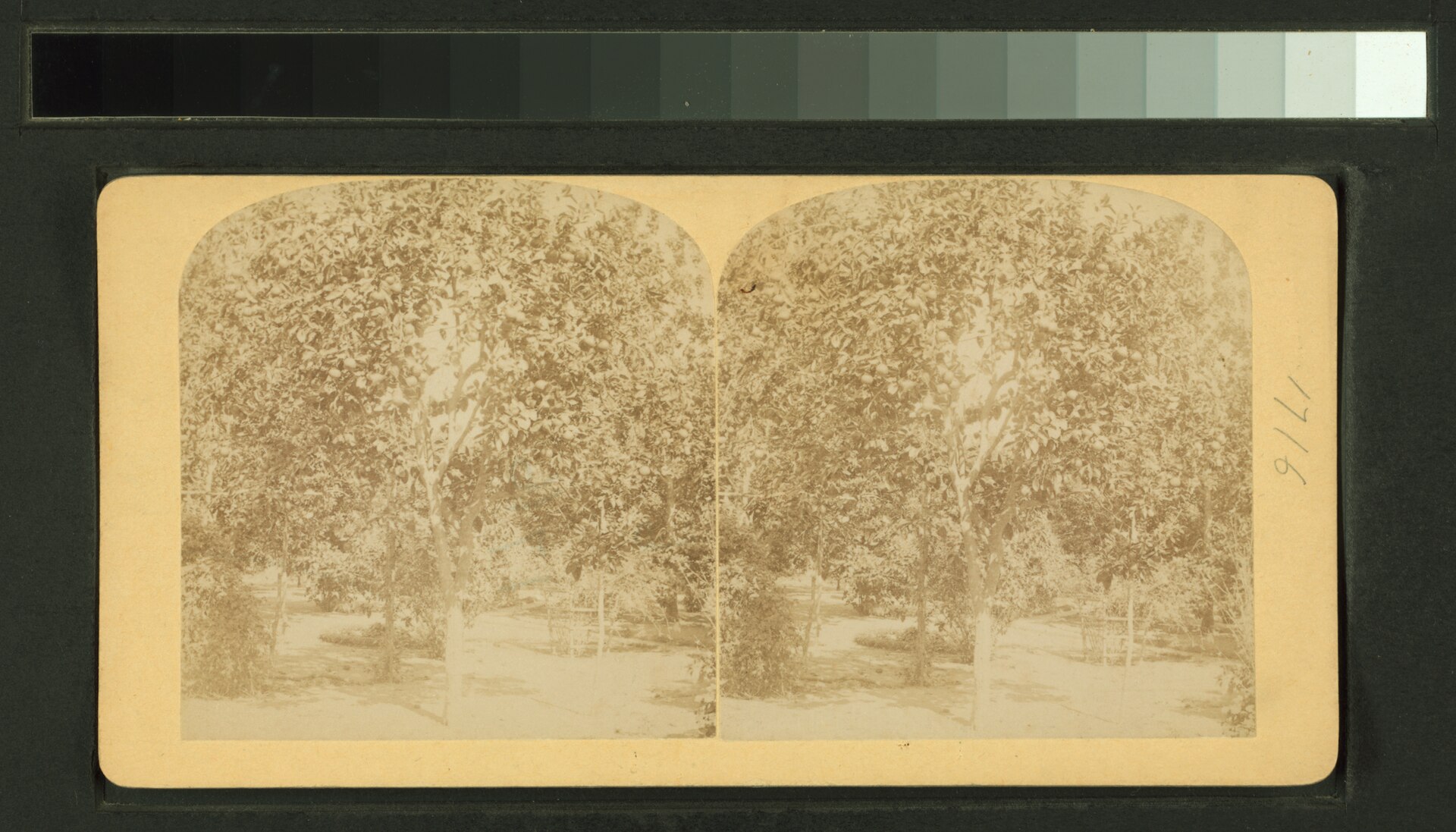
Two cold events three weeks apart in the winter of 1894–95 ended Florida’s first citrus boom. The first hit December 27–29, 1894, dropping Indian River temperatures into the high teens. The second hit February 7–8, 1895, after several weeks of unseasonably warm weather had pushed surviving trees into new growth that was killed wholesale by the second freeze. The combination is what made it catastrophic. A single freeze in the dormant season kills the crop; a second freeze on newly-grown wood kills the trees.
The Indian River groves at Mims and northern Brevard County were at the freeze zone’s northern edge for commercial citrus. Their losses were proportionally higher than groves further south. Many never replanted.
What the temperatures actually did
USDA’s Yearbook of Agriculture 1894 and the following year’s volume documented overnight lows at U.S. Weather Bureau stations across the Florida east coast. Jacksonville recorded 14°F on December 29, 1894. Titusville, which had no permanent Weather Bureau station of its own, was estimated by Bureau reports at roughly 18°F overnight on December 28–29.
Citrus trees can survive brief exposure to the mid-20s with damage to fruit but not to trunk and major limbs. Sustained exposure below 20°F, especially when trees are pushing tender new growth, kills the cambium layer and effectively kills the tree. The February 1895 freeze did exactly this on a regional scale.
How grove operators responded
In December, immediately after the first freeze, most operators assessed the damage and concluded the trees would survive. Crop was lost (oranges that had been on the tree dropped, many already mature ones froze on the wood), but the trees themselves looked recoverable. Operators began the standard post-freeze management: pruning back damaged tips, fertilizing to encourage spring growth.
The unusual warm spell of mid-January 1895 accelerated the regrowth. By the first week of February, many groves had pushed several inches of new shoots. When the February 7–8 freeze hit, that new growth was wholly unprotected. The freeze killed it back to old wood, and on many trees, killed the old wood too.
T. Frederick Davis’s A History of the Disastrous Freeze of 1894–95 in the Florida Historical Quarterly (Vol. 16, No. 4) is the most cited contemporary academic account of the response phase. Davis documents grove-by-grove damage assessments from across the state, including Indian River observations.
The geographic gradient
The damage gradient ran south. Groves north of Daytona were essentially total losses. Indian River groves at Titusville and Mims, on the climate zone’s edge, were near-total losses. Groves at Rockledge, Eau Gallie, and Melbourne (forty to seventy miles south of Titusville) lost the crop and most of the new wood but a higher fraction of the trees survived to replant. Groves south of Vero Beach and Fort Pierce had significantly higher survival rates. Groves around Lake Wales and the inland ridges (Polk County) survived best of all.
That gradient explains the post-freeze geography of Florida citrus. Polk County and the inland ridge surged as the new center of Florida citrus production. The Indian River region recovered partially but never to its pre-freeze dominance. North Brevard (Titusville–Mims) effectively dropped out of commercial citrus for most of the 20th century, except for a few persistent grove families on the warmer Merritt Island and along the lagoon’s east bank.
What it did to north Brevard’s economy
For Titusville the freeze coincided with several other disruptions: the FEC railroad had extended past the town, reducing its terminus-and-transshipment economic premium; the Indian River steamboat trade was already declining; and the courthouse fire of 1894 (a separate event from the freeze) destroyed county records and slowed local government recovery.
The 1890 census put Brevard County’s population at 3,401, with Titusville at perhaps 800. The 1900 census showed Brevard at 5,158, with Titusville essentially stagnant near its 1890 level. Population growth had shifted south along the FEC line to the smaller Indian River grove towns that had been able to replant.
Mims, just north of Titusville, was hit even harder. The 1890 census recorded Mims as a sustained agricultural settlement with multiple commercial groves. By 1910 most of those groves were gone. The economy that returned to Mims through the early 20th century was a different one, more agricultural-diverse (vegetables, some tobacco, eventual return of citrus by the 1920s on more cold-tolerant rootstocks and at different orchard layouts).
What changed in citrus management
The 1894–95 freeze drove several lasting changes in Florida citrus practice:
- Rootstock selection. Operators began using cold-tolerant rootstocks (sour orange, later trifoliate orange hybrids) that allowed scions to survive freezes that would have killed the original sweet orange standards.
- Smudge pots and grove heating. Through the early 20th century operators experimented with oil-fired smudge pots and other supplemental heating during freezes. Effectiveness was modest; the practice persisted in some operations into the 1980s.
- Geographic migration. Capital moved south. New grove development through 1900–1920 concentrated in counties south of Brevard.
- Insurance and risk pricing. Crop insurance for Florida citrus emerged as a defined product in the early 20th century, partly in response to the magnitude of the 1894–95 loss.
The freeze that built Miami
The single most consequential downstream effect of the 1894-95 freeze was the southward extension of Henry Flagler’s railroad past Palm Beach to Biscayne Bay. Per the Wikipedia entry on the Great Freeze, Julia Tuttle, Miami’s founder, persuaded Flagler to extend the Florida East Coast Railway after she demonstrated that the Biscayne Bay area had escaped the freeze damage that had wiped out groves to the north. Flagler’s track reached Biscayne Bay on April 15, 1896, sixteen months after the February 1895 freeze. The city of Miami was incorporated in July 1896, with Flagler as the dominant infrastructure investor.
Without the freeze, Flagler had no commercial incentive to push the railroad past Palm Beach. The freeze created the incentive by demonstrating that the citrus economy needed warmer geography and that resort tourism could anchor a southward extension that grove freight alone would not have supported. Miami’s existence as a major city is, in this causal chain, downstream of the freeze that killed the groves in Brevard County.
For Titusville the southward extension was a mixed blessing. The rail traffic that had concentrated at the Titusville depot in 1885 to 1893 redistributed across the new stops at Fort Pierce, West Palm Beach, and eventually Miami. The town stopped being a terminus much faster than it would have without the freeze accelerating Flagler’s expansion plans.
The statewide production collapse
The production numbers tell the scale. Per Wikipedia citing USDA data, Florida’s citrus output before the freeze was “as much as six million boxes of fruit per year.” After the February 1895 freeze, “output plummeted to just 100,000 boxes and did not break the one-million-box mark again until 1901.” Land values collapsed from approximately $1,000 per acre to as little as $10 per acre in the worst-hit grove regions.
A 98 percent production drop in a single season is hard to grasp. The Indian River grove operators who had been shipping fruit by FEC rail to New York in December 1894 were, by February 1895, sitting on dead trees with no insurance, no fruit, and a land asset that had lost 99 percent of its market value. Operators who held capital and replanted recovered partially over the next decade. Operators who could not finance the replant lost the land. The post-freeze ownership map of Florida citrus was substantially redrawn within five years.
The freeze in collective memory
The Great Freeze of 1894–95 is one of the few events from before 1900 that’s still referenced regularly in Florida agricultural and historical writing. UF/IFAS publishes a brief history of it as part of citrus extension education materials. The Indian River Citrus League maintains historical records on its long-term impact on the regional industry. The 1962 freeze (less severe but still significant) and the 1989 freeze (which marked the end of citrus production in much of north-central Florida) are sometimes compared in scale, but neither matches the 1894–95 event’s magnitude.
For Titusville specifically, the freeze was the moment the town’s economic future shifted from agriculture to government and, eventually, to the federal-space-program economy that arrived sixty years later. Without the freeze, Titusville might have remained a citrus-shipping hub. With it, the town’s economic base collapsed to its county-seat institutional functions until something else arrived to replace agriculture. That something else, in time, would be NASA.
Further Reading
As an Amazon Associate we earn from qualifying purchases.