The Florida East Coast Railway reaches Titusville, 1885
Henry Flagler's southward push from Jacksonville hit Titusville first. The town went from Indian River steamboat terminus to FEC depot in a single year, and never looked the same.
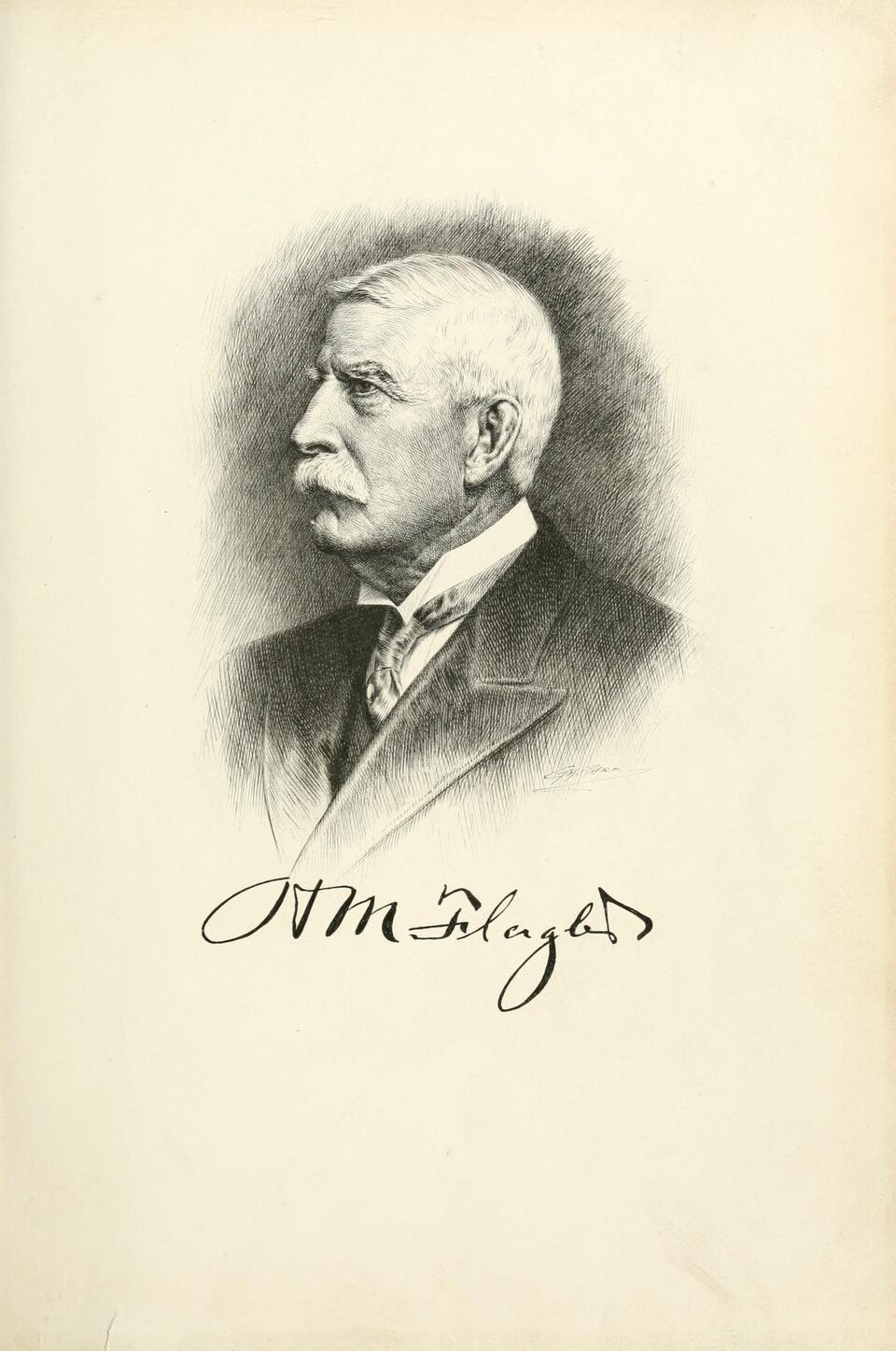
The railroad reached Titusville in 1885. Henry Flagler had acquired the Jacksonville, St. Augustine and Halifax River Railway in 1885 and consolidated several short lines as part of the system that would later be reorganized as the Florida East Coast Railway. The push south from Jacksonville hit Titusville in December 1885, terminating at the Indian River bluff that had been a steamboat dock the year before.
It was the railroad’s southernmost extent for less than a decade. Within five years the line had pushed past Titusville to Cocoa, Eau Gallie, Melbourne, and the upper Indian River grove towns. Within fifteen years it had crossed the state and reached Miami. By 1912 the Key West Extension had opened, completing what Bramson’s Speedway to Sunshine (Boston Mills Press, 1984) calls the most ambitious private rail construction in American history.
For Titusville, the year the railroad arrived was the year the steamboat era ended. The two transportation systems coexisted for a few years; by the early 1890s the Indian River steamboat traffic had collapsed. The hotel guests, the freight, the mail, the citrus shipments all switched to rail within a single transit generation.
What Flagler wanted
Flagler wasn’t a Floridian. He was a Standard Oil partner of John D. Rockefeller, with a fortune built in Cleveland through the 1860s and 1870s. He came to Florida in 1878 with his first wife, Mary Harkness Flagler, who was ill; she would die in 1881. He returned in 1883 with his second wife and concluded that Florida’s east coast had the climate to become a Northern winter destination if the transportation problem could be solved.
The transportation problem in 1883 was severe. To get from New York to the Indian River required: rail to Jacksonville, steamer up the St. Johns to Sanford or Enterprise, ox-cart or wagon overland to the Indian River, then sailing craft or steamer south down the lagoon. A trip that’s six hours of air travel in 2026 took roughly five days in 1883, and the final overland leg was unreliable in wet weather.
Flagler’s solution was to consolidate or build a continuous rail line down the east coast. The 1885 push that reached Titusville was part of the first phase. Subsequent extensions south (1893 to Palm Beach, 1896 to Miami) were the marquee events. But Titusville was the first major Indian River town the railroad touched, and the first place where the steamboat-to-rail transition played out in real economic terms.
What it did to Titusville
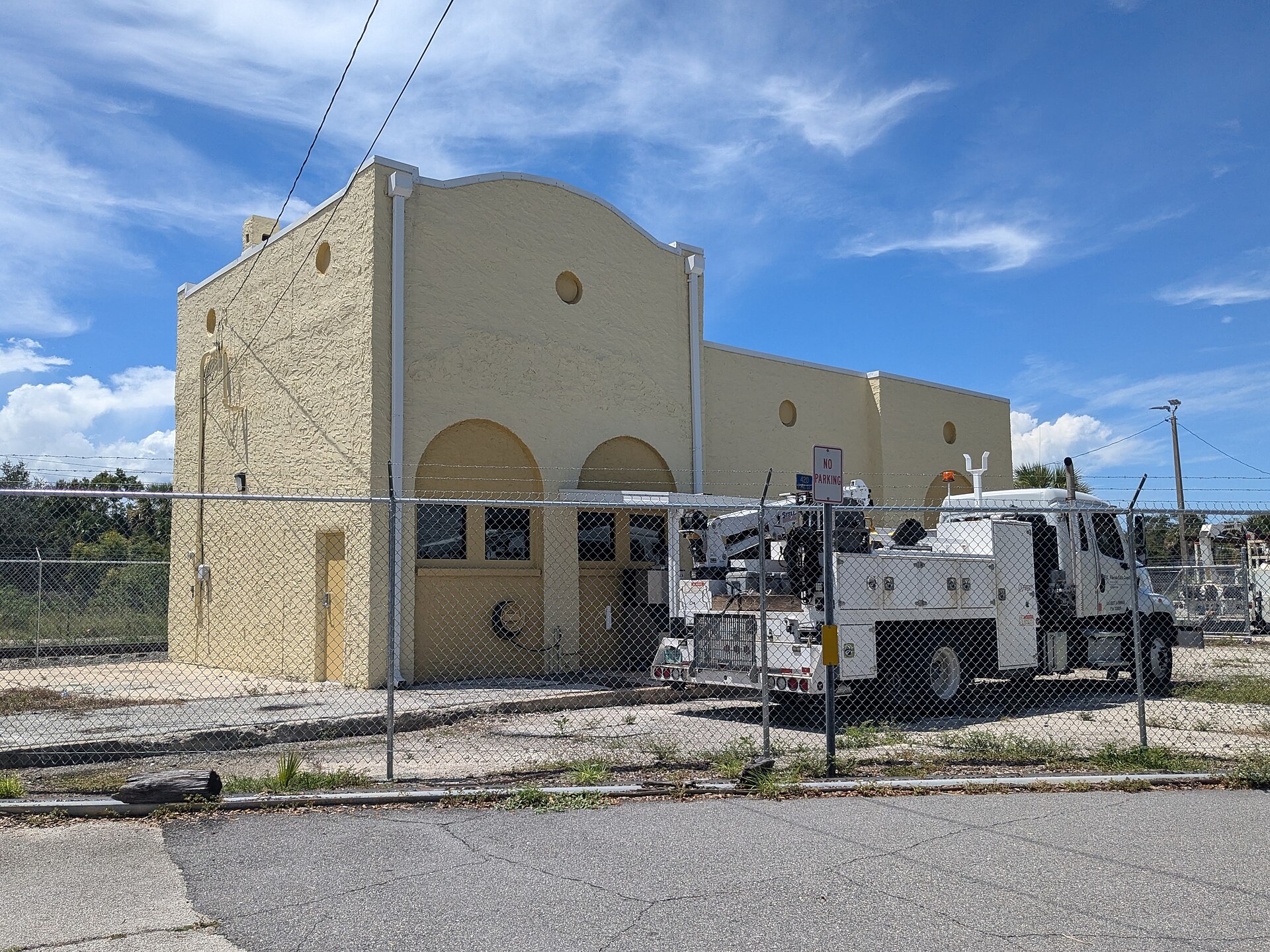
The depot Flagler built in Titusville stood on the west side of the tracks, north of the present-day downtown core. The current Titusville train depot building on Wikipedia Commons reflects a later structure on the same site, not the original 1885 building. The 1885 depot was a small wood-frame structure typical of FEC stations of the period; it was replaced or substantially rebuilt at least twice through the early 20th century.
For Titusville the immediate effect was a five-year boom. Hotel construction picked up. The Sand Point Hotel got new competition from rail-served properties. Pineapple and citrus shipments that had previously moved by Indian River steamboat to Jacksonville now moved by FEC rail to the same Northern markets in a quarter of the time. The 1885–1890 period was probably the most economically productive in Titusville’s pre-Apollo history.
Then the line kept going south. By 1895 the FEC mainline extended past Titusville to Palm Beach. Titusville stopped being a terminus and became a stop. Grove operations on the Indian River south of Titusville (Rockledge, Eau Gallie, Sebastian, Vero) got the same rail service. The competitive advantage of being the railhead lasted less than a decade.
The 1894–95 freeze (covered in a separate article) hit during this same window and devastated the citrus economy. Titusville’s hotels survived; the grove-shipment business through the FEC depot collapsed; the recovery took decades and never fully restored the 1885–1893 trajectory.

The line as it stands today
The FEC mainline still runs through Titusville. Brightline, the modern higher-speed passenger service that opened the Miami–Orlando connection in 2023, uses the FEC corridor for its southern segment. The Brightline route does not currently stop in Titusville (the Orlando–Miami route bypasses the Brevard depot towns), but the rail right-of-way Henry Flagler assembled in the 1880s is what carries those trains.
The historic depot building shown in most modern photographs is a later FEC structure than the original 1885 building. The original was wood-frame and small; the building visible in Florida Memory’s mid-20th-century photographs is a brick or stucco structure typical of FEC’s 1910s–1920s station upgrades. Documentary continuity between the original site and the current preserved building is good; the building itself is a generation or two removed.
What Flagler did and didn’t do for Titusville
Flagler’s grand-resort program (the Ponce de Leon in St. Augustine, the Royal Poinciana in Palm Beach, the Royal Palm in Miami) bypassed Titusville. The town wasn’t on the destination list. Flagler’s hotels were built where he could differentiate from existing local competition; Titusville already had the Sand Point Hotel and several smaller properties, and the climate at Titusville’s latitude was not quite far enough south to support the January winter-resort programming that Palm Beach or Miami could.
What Flagler did do for Titusville was bring the depot. The depot brought the freight, the mail contracts, the everyday commercial connection to the rest of the country. Titusville stopped being an isolated Indian River town and became a depot town on a national rail network. That mattered as much as any single piece of infrastructure in the city’s first century.
The JStA&HR acquisition timeline
Flagler’s path to a continuous east-coast rail line ran through corporate consolidation, not greenfield construction. Per the Florida East Coast Railway corporate history, Flagler “joined the board of the JStA&HR on December 10, 1885, before fully purchasing the line.” The Jacksonville, St. Augustine and Halifax River Railway was a narrow-gauge predecessor he then converted to standard gauge and extended south. The board seat in December 1885 was the formal beginning of what would become the FEC; the southward push through Titusville in the same period was operational rather than corporate.
The 1885 board seat date matters for understanding what Flagler actually controlled when. He did not own the line outright on the day his board appointment took effect; he was a major shareholder and director of a still-independent company that was already in motion southward. The full corporate consolidation that produced the Florida East Coast Railway brand happened over the next several years, with the FEC name formally adopted in 1895. The Titusville depot built in late 1885 was, technically, a JStA&HR facility for several more years before the rebranding.
Flagler’s path south after Titusville
After the Titusville extension, Flagler pushed south at a pace that reflected both his capital availability and the urgency of getting ahead of competing investors. Per the FEC corporate history, the southward extensions reached Fort Pierce on January 29, 1894, West Palm Beach by March 22, 1894, and Biscayne Bay (the Miami terminus) on April 15, 1896. The Homestead extension followed in 1904, and the Key West Extension was completed January 22, 1912, with Flagler riding the inaugural train and reportedly saying, “Now I can die in peace.”
That sequence puts Titusville’s 1885 arrival in perspective. The town was the first significant Indian River destination for the line and held that primacy for about eight years, until Fort Pierce in 1894 became the new southern terminus and Titusville became a mid-route stop. Eight years was enough to redirect the town’s commercial geography permanently around the rail; it was not enough to make Titusville a Flagler-resort destination on par with what the 1894 to 1912 extensions produced at West Palm Beach, Miami, and Key West.
Sources, briefly
The Flagler Museum’s Whitehall archive in Palm Beach holds the Henry M. Flagler papers; correspondence covering the 1885 push is accessible to researchers. Seth Bramson’s Speedway to Sunshine is the standard published narrative on the FEC and its Titusville-and-points-south construction. Florida Memory’s photograph collection includes period images of Titusville’s FEC depot at multiple stages of its evolution. Brevard County deed records (post-1894) document the railroad’s right-of-way acquisitions.
Further Reading
As an Amazon Associate we earn from qualifying purchases.