January 28, 1986: Titusville and the Challenger viewing crowd
Schoolchildren and families lined the Titusville waterfront the morning of Space Shuttle Challenger's launch. The mission ended 73 seconds in. For Brevard County the loss was personal.
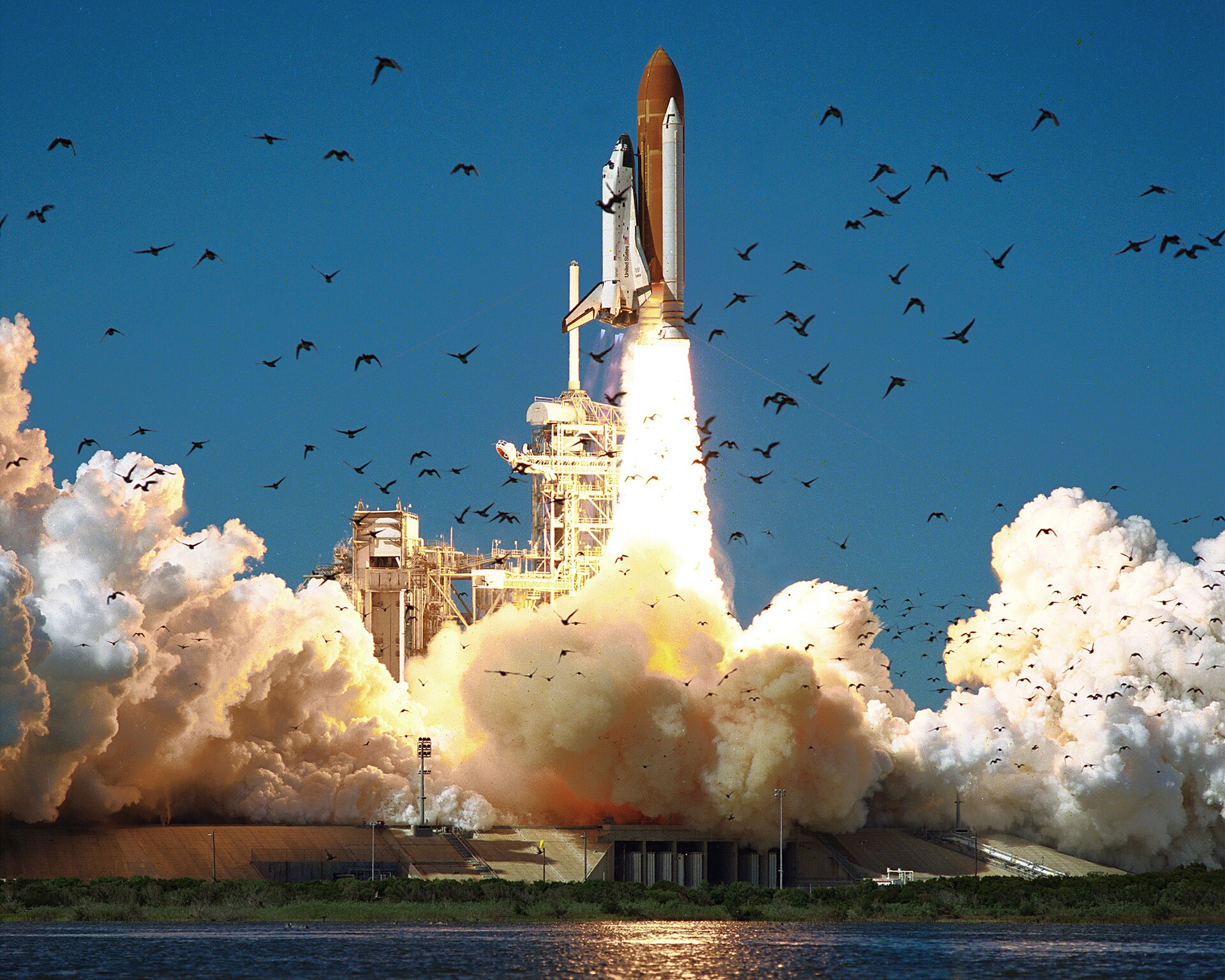
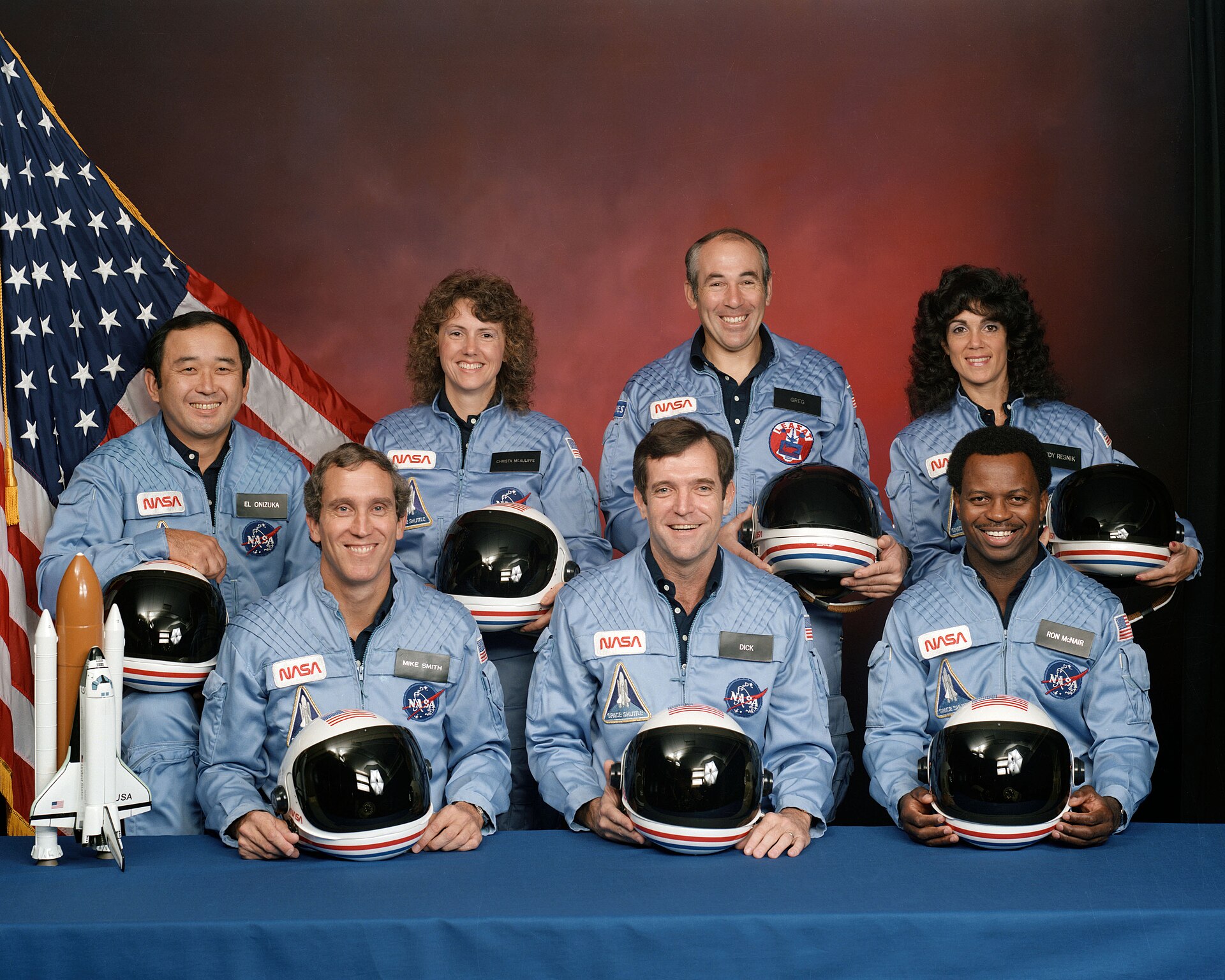
Challenger lifted off from Pad 39B at 11:38 AM Eastern Standard Time on Tuesday, January 28, 1986. The vehicle disintegrated 73 seconds into the flight, at an altitude of approximately 48,000 feet, in a structural failure initiated by an O-ring seal breach in the right solid rocket booster. All seven astronauts on board were killed: Francis Scobee, Michael Smith, Judith Resnik, Ellison Onizuka, Ronald McNair, Gregory Jarvis, and Christa McAuliffe (the Teacher in Space Project finalist, the first private citizen scheduled for a shuttle mission).
For Titusville the morning had been ordinary. The cold front that had passed through central Florida overnight had left temperatures unusually low for the time of year, overnight lows had dipped below freezing at several inland locations, an unusual occurrence for the Florida peninsula in late January. The morning of launch was clear, cold, and bright. Families had brought children to Space View Park and to the Indian River waterfront to watch what was, by 1986, the most-publicized shuttle launch in the program’s history.
What the launch viewing was
By January 1986 the Space Shuttle program had been operational for nearly five years (the first flight, STS-1, had been in April 1981). Launches had become routine enough that the broader American public didn’t typically watch them; coverage on network news had been declining for several years. Challenger’s STS-51-L mission was the exception. The presence of Christa McAuliffe, selected from over 11,000 applicants for the Teacher in Space Project, had pulled the launch back into broad national attention.
Schools across the country had organized classroom viewings via the CNN cable feed, NASA’s own educational broadcast, and (in Florida) local television coverage. In Brevard County specifically, the schools had organized outdoor viewing for many classes, the launch was visible from school playgrounds and athletic fields across the county, weather permitting.
Space View Park was the formal mainland public-viewing location. The crowd that morning included Titusville residents, families of NASA contractors, schoolchildren on field trips, and the standard out-of-town launch visitors. Estimates of the total Brevard County viewing-crowd numbers have varied; the broader Brevard public-viewing crowd was likely tens of thousands across all sites.
What people saw
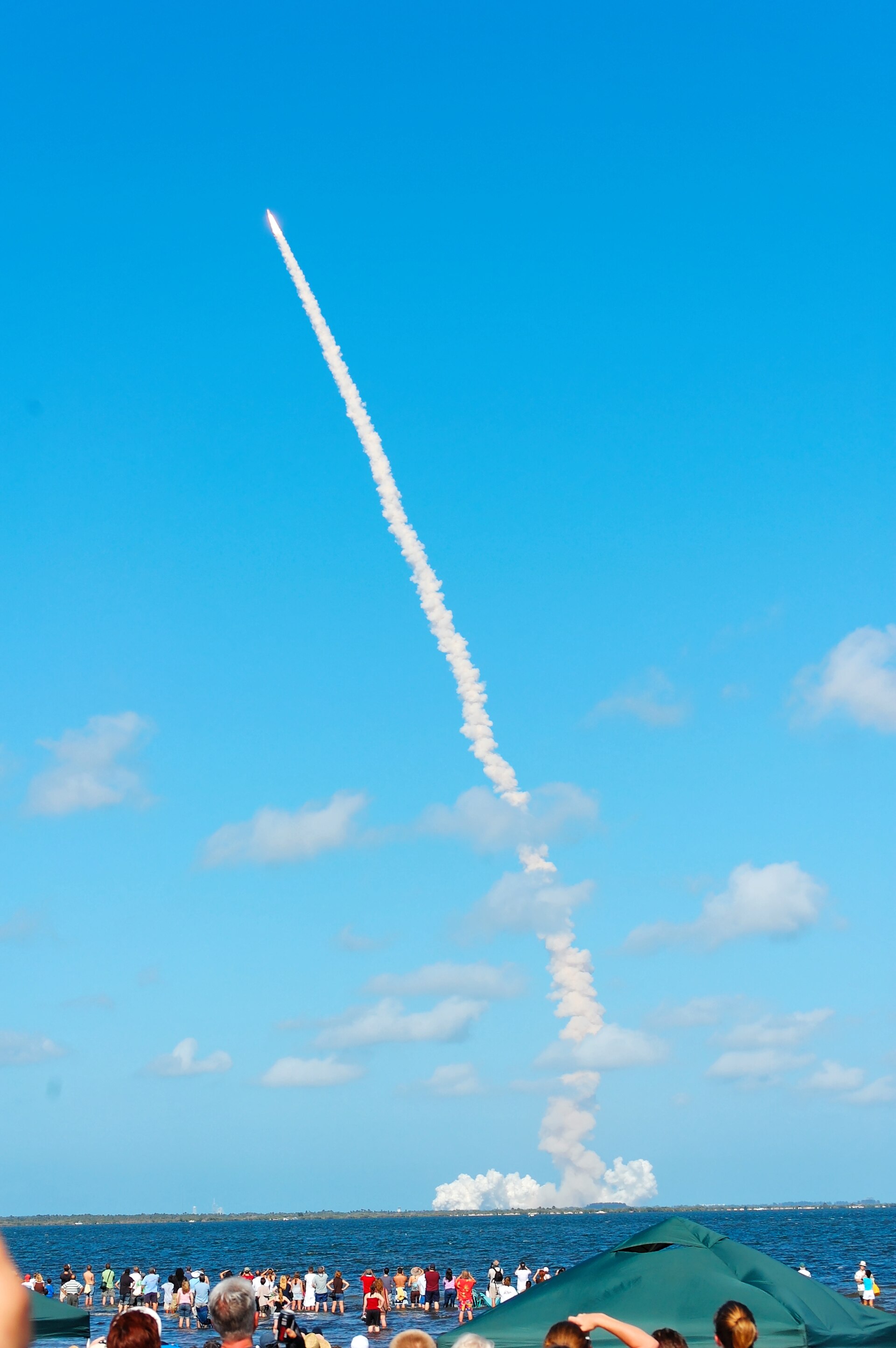
The vehicle lifted off and climbed normally for the first minute. Several Titusville viewers at Space View Park later described the launch as visually unusual, the cold morning produced a longer-than-typical visible plume from the SRBs, and the lighting conditions made the vehicle visible at altitude longer than on warmer days.
At 73 seconds the explosion was clearly visible. The breakup produced two trailing plumes diverging from the central debris cloud, with one continuing upward (the right SRB, which had broken free and was running on internal propellant) and the broader debris cloud spreading laterally. For viewers at Space View Park, thirteen miles west, the explosion was unmistakable but the immediate ambiguity was severe: was this an unusual but normal feature of the launch, or had something gone catastrophically wrong?
The answer became clear within minutes. The audio from NASA’s launch director and from the public address system was clear: “Obviously a major malfunction.” The visual confirmation followed: no second-stage main-engine cutoff, no separation event, no return path for the orbiter. By the time the debris began falling visibly back into the Atlantic, the crowd at Space View Park knew the mission had failed.
The Brevard County reaction
Christa McAuliffe’s presence on the mission had pulled national attention. For Brevard County the loss was something deeper. Many of the schoolchildren watching from Brevard schools had parents who worked at Kennedy Space Center. The contractor workforce that built and serviced the Shuttle was concentrated in the county. The teachers organizing classroom viewings were colleagues, by professional association if not direct acquaintance, with McAuliffe. The astronauts’ families lived in Houston (Johnson Space Center) but the Cape Canaveral preparation cycle had meant the crew had been in Brevard County for weeks before launch.
In the days that followed the launch, the recovery operation in the Atlantic became the visible federal activity. NASA and the U.S. Navy salvaged debris from the impact zone for months. The investigation that followed, the Rogers Commission chaired by William Rogers, with Richard Feynman as its most public-facing member, produced its report in June 1986. The cause: an O-ring seal failure in the right SRB, made critical by the unusual cold-weather launch conditions, with contributing factors that traced through NASA’s organizational culture and management decision-making.
The Shuttle program was grounded for 32 months. The first post-Challenger flight, STS-26 (Discovery), launched in September 1988. The intervening period was, for Brevard County, the most economically depressed since the post-Apollo contraction of the 1970s.
What Titusville did
The City of Titusville’s response in the days after January 28, 1986 was, in the public-record material from Florida Today and from the city’s own retained documents, the response of a community that had absorbed the loss into its identity. Memorial services at local churches; the establishment of a Challenger memorial scholarship through the Brevard schools; the eventual installation of memorial markers at Space View Park.
Space View Park’s broader memorial program, established formally in 1992, incorporated Challenger as one of the program elements with appropriate dignity. The Challenger memorial element at the park is, in the bronze-plaque format consistent with the rest of the park’s commemorative system, present and maintained.
What January 28 meant for the Shuttle program
The Challenger disaster reshaped the Space Shuttle program. The Teacher in Space Project was suspended (the first teacher to fly in space, Barbara Morgan, who had been McAuliffe’s backup, eventually flew on STS-118 in 2007, twenty-one years after Challenger). Civilian payload-specialist flights ended. The shuttle’s flight rate, which had been ambitiously projected at 24 missions per year by the mid-1980s, was permanently revised downward; the actual peak was nine launches in 1985, and the program never again approached that rate.
The Columbia disaster on February 1, 2003 (the reentry breakup that killed seven more astronauts) ended the Shuttle’s flight to the International Space Station and accelerated the program’s wind-down. The Shuttle’s last flight was STS-135 in July 2011.
What Brevard County learned
Challenger taught Brevard County, and the broader American public, that human spaceflight is dangerous in ways that the post-Apollo decade of routine Shuttle operations had been allowed to forget. The pre-launch decision-making process that led to the O-ring failure became a case study in engineering ethics, organizational decision-making, and management failure. NASA’s own internal reforms after Challenger, and the additional reforms after Columbia in 2003, reshaped the agency’s risk-management culture.
For Titusville the lesson was personal. The thirteen miles between Space View Park and Pad 39A had been a viewing distance, an asset of the city’s identity, the foundation of its “Space City USA” branding. After January 28, 1986, that thirteen-mile distance was also the distance at which the city had watched seven Americans die in the sky.
The viewing didn’t stop. The next launch the city watched, when it finally came in September 1988, was met with appropriate caution. Space View Park is still where the mainland watches. But the meaning of what’s being watched changed permanently on that cold January morning.
Further Reading
As an Amazon Associate we earn from qualifying purchases.