The Apollo-era population boom and bust in Titusville
Titusville's population grew from 2,604 in 1950 to over 30,000 by 1970. The post-Apollo years stalled that growth and emptied parts of the 1960s housing stock.
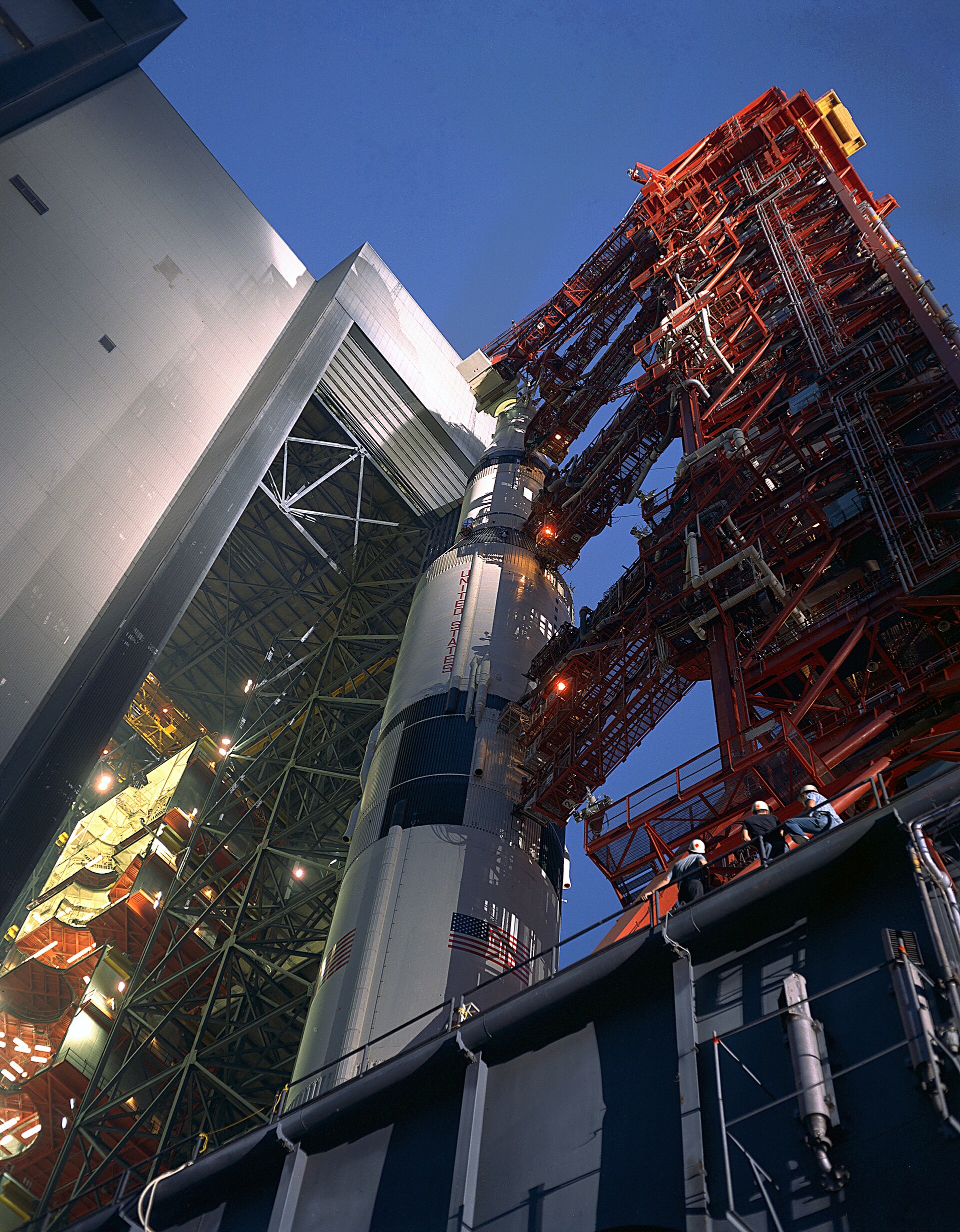
The census data is what makes the trajectory unmistakable. Titusville’s population in 1950 was 2,604. In 1960 it was 6,410. In 1970 it was 30,515. That’s an order-of-magnitude increase in a decade, driven entirely by NASA, the contractor workforce, and the secondary services they required.
After 1970 the growth flattened. The 1980 census recorded Titusville at 31,910. The 1990 census at 39,394. The 2000 census at 40,670. The 2020 census at 48,789. The Apollo boom decade was 1960–1970. Every subsequent decade has been incremental.
The pre-NASA baseline
In 1950 Titusville was a small county-seat town. Most of its working-age residents were in agriculture (citrus, vegetables, fern nurseries), local government, retail and services, or commercial fishing on the Indian River and Mosquito Lagoon. The town’s economic base was effectively unchanged from 1900. Population had grown modestly from 1900 (about 1,100) through 1950, but not in ways that required a major housing infrastructure or major commercial expansion.
This was the Titusville that the 1962 establishment of the Manned Spacecraft Operations Building at Kennedy and the 1963 start of Pad 39 construction hit. The town was structurally unprepared for the population spike that followed.
The 1960s build
The construction boom in Titusville from 1962 onward was substantial. New subdivisions north of the older downtown (the Whispering Hills, Indian River City, and several others), new motel construction along US-1, expanded retail north of the central business district, several new schools (Astronaut High School opened in 1969 to handle the elementary-and-secondary surge), and substantial upgrades to water, sewer, and roads.
Much of the housing built in the 1960s was speculative, built on the assumption that NASA’s growth trajectory would continue. The trajectory did continue through 1969. Then the program ended.
The 1970s contraction
Apollo’s official end in 1972, followed by the Skylab and Apollo–Soyuz tail and the multi-year gap before Shuttle operations began in 1981, removed a substantial fraction of the contractor workforce that had supported the 1960s housing build.
Titusville’s experience was atypical compared to the regional contraction. Cocoa Beach (closer to the smaller Cape Canaveral Air Force Station pads, with strong tourism-and-beach economy independent of NASA) softened the contraction with continuing tourism. Cocoa (a larger general-services city with diversified commercial base) weathered the contraction. Titusville, with the highest proportional NASA-contractor exposure, took the deepest hit.
Multiple Titusville motels closed in the 1970s. Several never reopened; their shells stood vacant along US-1 into the 1990s before demolition or redevelopment. The 1960s subdivisions north of downtown saw above-average foreclosure rates through the 1970s. Several commercial blocks that had served the Apollo workforce lost their anchor tenants.
The town’s school enrollment, which had spiked during the early 1960s with the arrival of NASA-engineer family populations, dropped through the 1970s. Astronaut High School, opened in 1969 to handle expected continuing growth, ran below capacity within five years of opening.
The Shuttle era (1981–2011)
Shuttle operations restored some of the contractor base but at a smaller scale than Apollo. Peak Shuttle-era Kennedy Space Center direct employment was approximately 15,000, versus Apollo’s peak of 26,000. The contractor multiplier was lower per mission than Apollo had been. The total Brevard County workforce supported by KSC through the 1980s and 1990s was roughly half the Apollo peak.
Titusville’s population growth in this period was modest. New subdivision construction continued at a slow pace, mostly on the city’s south and west edges. The downtown commercial district along Washington Avenue and Main Street decayed steadily through the 1980s and 1990s as retail and dining shifted to US-1 strip development and, eventually, to the Titus Landing and Searstown commercial centers further from the original core.
The 2011 Shuttle-end and its aftermath
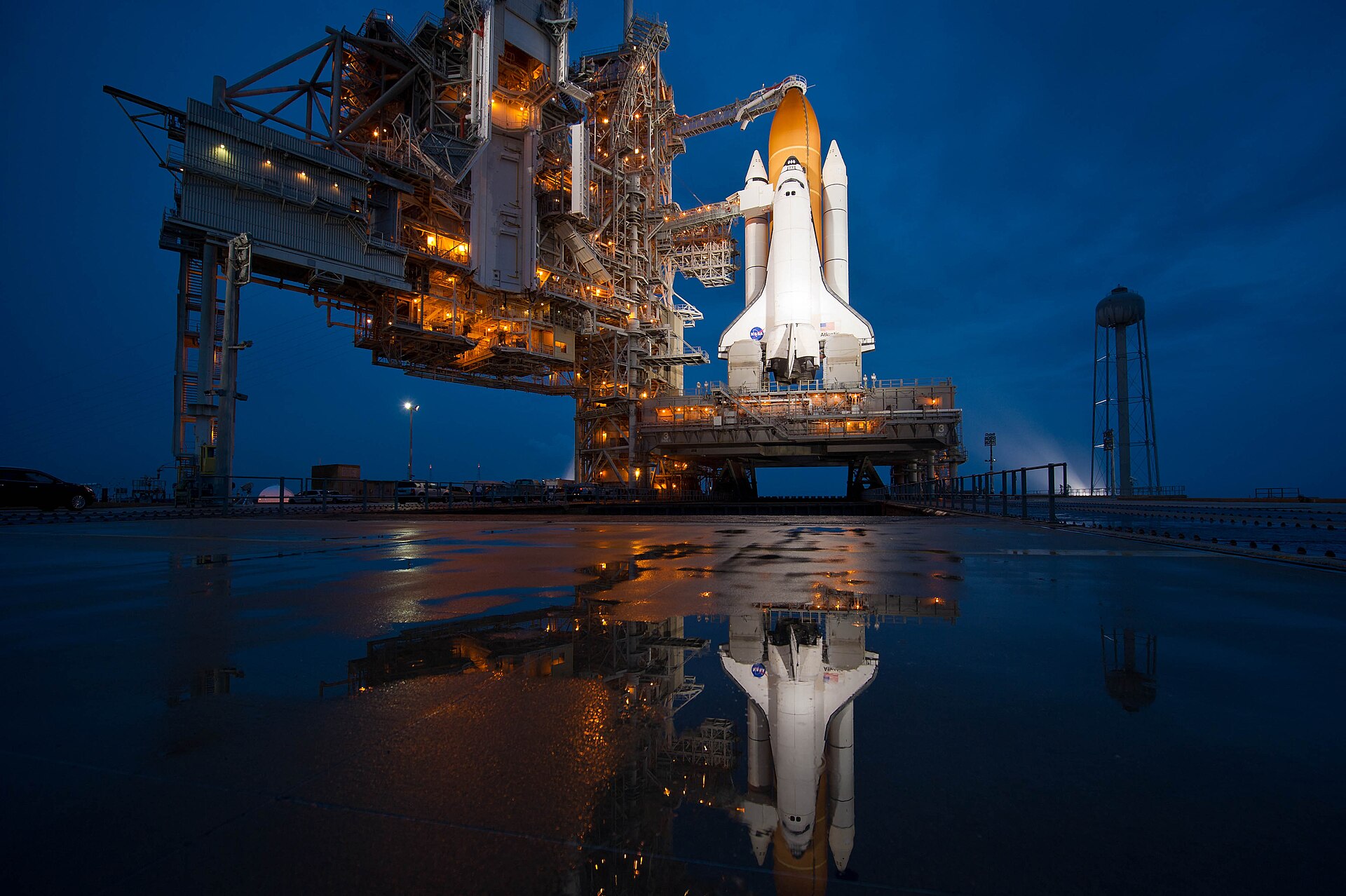
The Shuttle program’s last flight, STS-135 in July 2011, removed several thousand more contractor jobs from the Kennedy Space Center workforce. Total KSC direct employment dropped to a multi-decade low. Brevard County’s economy felt the contraction acutely; Titusville’s particularly so given the concentration of contractor-supported housing and commercial activity.
The 2010s recovery was led by SpaceX (which began operations at KSC in 2014, eventually taking over Pad 39A), Blue Origin, United Launch Alliance, and other commercial space operators. By the early 2020s the Kennedy Space Center workforce had recovered substantially, though the structure was different: more commercial, less government-direct, with workforce mobility patterns that look more like a major industrial cluster than the Apollo-era contractor system.
Titusville’s 2020 census population of 48,789 is the highest in the city’s history. The growth from 2010 (43,761) to 2020 (48,789) was the strongest decadal gain since the 1960s boom.
The post-2011 housing inventory
Titusville’s housing stock in 2026 still reflects the layered history. The pre-1960 fabric (downtown, the older streetcar-era and pre-FEC streets near the river bluff) is intact. The 1960s Apollo-era subdivisions are mostly still in use, in various states of renovation and reinvestment, with several pockets of long-deferred maintenance and some neighborhoods that have steadily gentrified through the 2010s. The post-2010 commercial-space-era residential build has concentrated on the city’s outskirts, primarily west toward I-95 and south toward Mims and Port St. John.
The KSC workforce in 2025
Kennedy Space Center’s current workforce, per the center’s own published figures, is 17,701 civil servants and contractors as of 2025. That figure is roughly 68 percent of the Apollo peak (26,000) and roughly 18 percent above the Shuttle-era 15,000 baseline. The composition has shifted decisively toward commercial-space contractors: SpaceX, Blue Origin, and United Launch Alliance together account for several thousand of the contractor positions, with NASA civil-service headcount substantially smaller than the Apollo-era civil-service base.
The 2025 KSC workforce supports a Brevard County labor market that looks structurally different from Apollo’s. Apollo-era jobs were concentrated on single-launch-program contracts with predictable multi-year horizons; commercial-space jobs are distributed across multiple programs, vendors, and pad operators, with more frequent re-competition and shorter individual contract durations. The aggregate workforce is comparable to a late-Shuttle baseline, but the per-worker stability is lower. Titusville’s housing market and commercial base have adapted to that pattern, with more rentals, more flexible-lease commercial space, and less of the long-tenure suburban-homeowner profile that characterized the 1960s build.
Why the demographic curve matters
A town’s identity comes from its inflection points. Titusville’s inflections are clear: 1867 (Titus arrives), 1880 (county seat), 1885 (FEC railroad), 1894–95 (the freeze), 1951 (the Moore bombing), 1962–1970 (Apollo boom), 1972 (Apollo end), 1981 (Shuttle start), 2011 (Shuttle end), 2014–2020 (commercial-space recovery).
The 1962–1972 Apollo decade is the single most consequential of those inflections for the modern city’s physical and demographic shape. Every street pattern, every school location, every commercial corridor, every motel-and-restaurant relic on US-1 is downstream of that ten-year period. Titusville is what NASA made it through Apollo. The town is still working out what it is in the post-Apollo, post-Shuttle, mixed-commercial-space era.
Further Reading
As an Amazon Associate we earn from qualifying purchases.